The Flamingo Myth: Separating Fact from Social Media
Few animals are as closely associated with a destination as the famous flamingos of Aruba. Social media, travel advertisements, and countless Instagram posts have helped create the image of bright pink flamingos strolling along pristine Caribbean beaches. However, visitors are often surprised to discover that reality looks a little different.
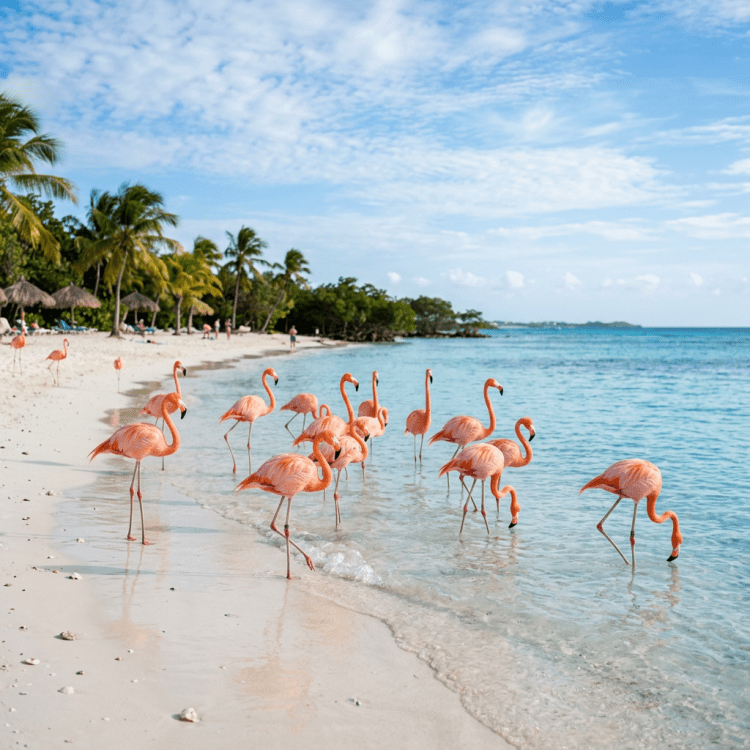
Despite being commonly referred to as “pink flamingos,” many of Aruba’s flamingos display shades of peach, coral, salmon, and orange rather than the vibrant pink often seen in edited photographs and promotional materials. Their coloring can vary depending on age, diet, and lighting conditions, but they are generally much softer and more subtle in appearance than popular media suggests.
Another common misconception is that these flamingos can be found throughout Aruba. In fact, they are not located on mainland Aruba at all. The famous flamingos reside on Renaissance Island, a private island owned by the Renaissance Wind Creek Aruba Resort, located just off the coast of Oranjestad.
Visitors staying at the resort have complimentary access to the island, while non-guests may purchase a limited number of day passes, subject to availability. At the time of writing, day passes cost approximately $125 USD per adult and include round-trip boat transportation to and from the island. Because the passes are limited and often sell out, it is advisable to purchase them in advance through the resort.
One of the highlights of visiting Renaissance Island is the opportunity to interact with and feed the flamingos. Food can be purchased on the island, and the birds will often approach visitors looking for a snack. While generally accustomed to human interaction, flamingos can be surprisingly assertive when food is involved. Their beaks are strong, and they may peck at hands or fingers while feeding, so visitors should exercise caution and remain aware of their surroundings.
Although the reality may differ from the heavily filtered images found online, the experience remains memorable. Understanding what to expect—both in terms of the birds’ true coloration and their location—helps visitors appreciate the attraction for what it is rather than what social media portrays it to be.
The lesson? Aruba’s flamingos may not be as pink as advertised, but they are every bit as fascinating.
 madeinmalaysia